I was very intrigued by this question as I hate to see the table paper and, as a patient, I always wondered what the benefit was. I asked our IC nurse this question and she answered below. We are discussing it further as some clinics have adopted it but we don't have a formal SOP for it and the table cleaning necessary.
APIC Text Ambulatory Basic Principles: https://text.apic.org/toc/infection-prevention-for-practice-settings-and-service-specific-patient-care-areas/ambulatory-care#book_section_757. Click or tap if you trust this link." target="_blank" rel="noopener">https://text.apic.org/toc/infection-prevention-for-practice-settings-and-service-specific-patient-care-areas/ambulatory-care#book_section_757
- "The examination tables should be covered with disposable paper or linen that is changed between patients. More thorough cleaning and disinfection should be done if contamination is visible."
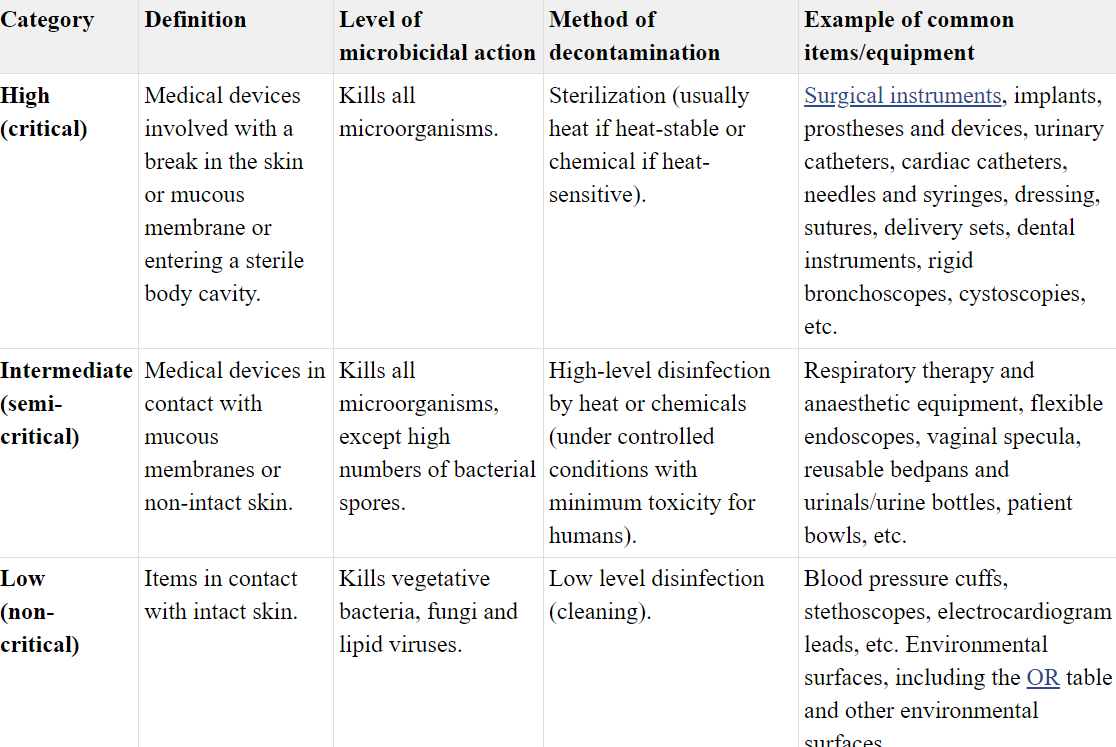
Also, referring to the Spaulding Classification (see the table below) to think this through, if there is an open wound that will touch the table, we should also be using a barrier. Knowing there are specific infections or concerns for potential infections is also an indication to use a barrier while the patient is on the exam table. I believe the whole reason for the table paper is to eliminate the risk of missing critical thinking to prevent any unknown transmission.
Final thought: We give you the option to test this out and weigh the risks and benefits on your own, but we wanted to make sure that you were fully equipped with the knowledge to use in the new process. I would recommend developing criteria and education on when to use an additional barrier to support the best outcome. I also would recommend working with your clinical staff to learn about potential barriers or failures that can occur when not using exam table paper.
------------------------------
Joanie Jeannette ANO
Associate Nursing Officer, Ambulatory Nursing
VUMC
Nashville TN
------------------------------